
Improving the Transition From Pediatric
to Adult Transplant Nephrology Care


At Children’s Wisconsin, we understand how challenging the transition from pediatric to adult care can be, especially for adolescents with kidney transplants. This period, spanning from six months before to two and a half years after transition, is marked by a sharp rise in kidney allograft failure. Studies show the rate increases from 2.2 to 6.6 per 100 person-years, with failure reported in up to 42% of cases.¹
One of the most significant challenges is the lack of standardized protocols across institutions. Without consistent transition planning, patients and families are left without preparation. Communication gaps between pediatric and adult teams result in fragmented handoffs. Limited coordination with primary care providers leaves young people without a clear guide. Adolescents are suddenly expected to self-manage medications, appointments, labs and insurance during a time of major cognitive, emotional and social development. These barriers increase the risk of medical nonadherence, unnecessary health care utilization and avoidable graft loss.
We know the incidence of medical nonadherence in chronic pediatric illness can be as high as 50%.² Often, families are unaware of how critical medication adherence is until a complication arises. When patients take on full responsibility during adolescence, they must juggle complex regimens along with the pressures of becoming more socially independent. Without adequate support, even highly motivated patients may struggle.
To close this gap, we developed a structured transition model in partnership with Froedtert & the Medical College of Wisconsin. Our approach is based on early, continuous education for patients and families. We introduce the idea of transition to adult care beginning at age 14. Through written and verbal communication, we create shared goals between families and the care team. We emphasize skill development over age-based milestones. Through skills-based readiness assessments, we evaluate a patient’s increasing autonomy and tailor support based on their individual progress.
As post-transplant patients age, we reduce the frequency of routine visits while continuing to track transition readiness. We provide tools for self-management, including coaching on timely medication refills, scheduling, insurance navigation and communication with providers. Recognizing the turbulence around life transitions like college or work, we continue post-transplant follow-up care through age 19 or 20. This additional year or two of support helps maintain stability before the final transfer to adult nephrology care.

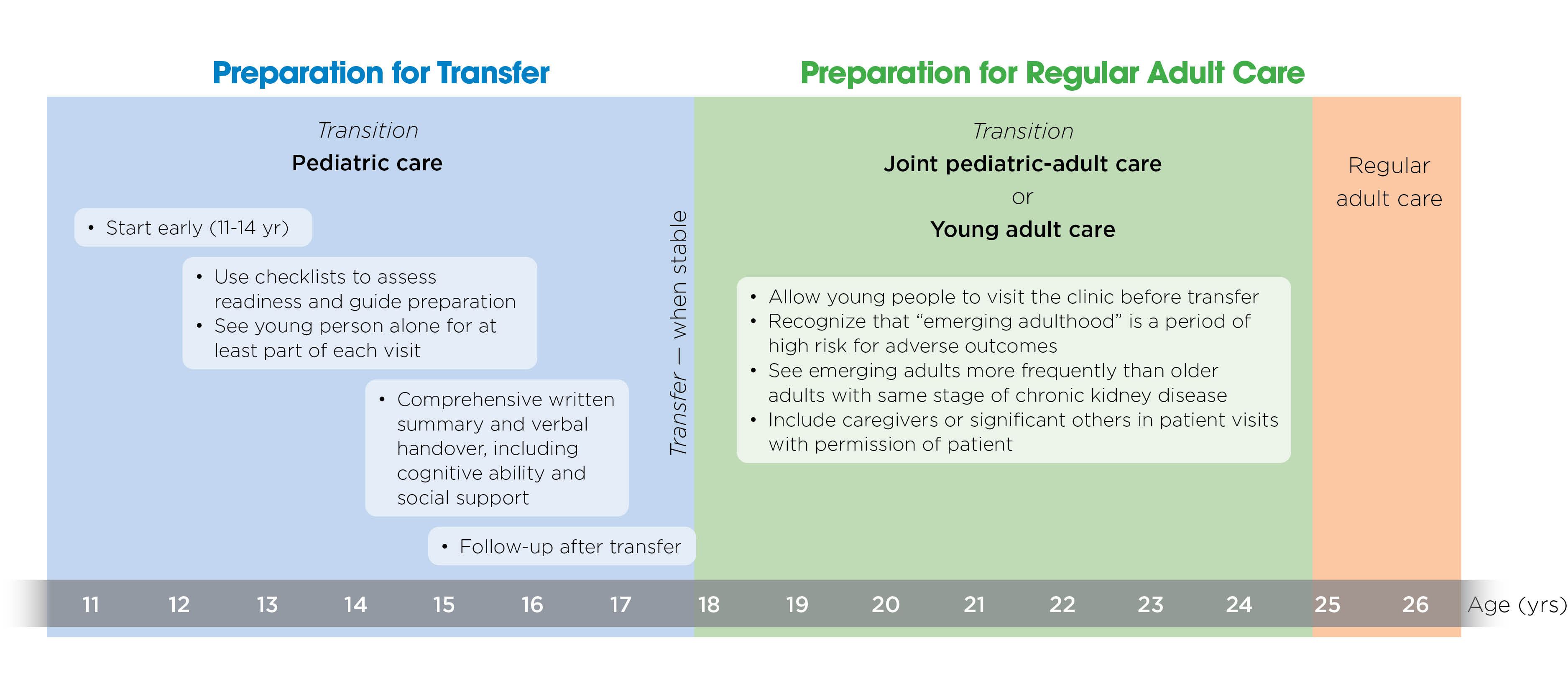
Our team collaborates across specialties, including adult and pediatric nephrology, pharmacy, psychology, social work and nursing. We track skills-based competencies to measure the program’s effectiveness across the population. This feedback allows us to identify gaps and strengthen areas where patients need additional support. We follow the Kidney Disease: Improving Global Outcomes transition care model² to structure our workflow and engage patients longitudinally across the adaptation period.
We are creating an environment in which adolescents are not only given tools but are also supported and understood. Our model gives families clarity on what to expect, builds confidence in patients and prepares both for a seamless, safe transition.
While some allograft loss may be unavoidable, we believe that loss due to nonadherence or lack of follow-up is unacceptable. A transition plan should never be left to chance. With structured communication, readiness tracking and interdisciplinary support, we can prevent complications and protect transplant outcomes during this vulnerable stage.
This model offers a blueprint for other chronic pediatric diseases. A standardized approach promotes continuity of care, improves communication across systems and keeps patients from falling through the cracks. It’s a model centered on patients, grounded in evidence and focused on improving outcomes.


References
1. Francesca Tinti, Luca Salomone, Michele Ferrannini, Annalisa Noce, Sandro Mazzaferro, Luca Dello Strologo, Anna Paola Mitterhofer, MO959. Kidney Transplant Transition From Pediatric To Adult Facility Care: Difficulties And Risk Factors, Nephrology Dialysis Transplantation, Volume 36, Issue Supplement 1, May 2021, gfab110.0038, https://doi.org/10.1093/ndt/gfab110.0038
2. Sreenivas A, Salgia E, Harish N, Raina R. Transition of care from pediatric to adult nephrology post-renal transplant: a review. Transl Pediatr. 2024 Sep 30;13(9):1641-1651. doi: 10.21037/tp-24-149.
 Built with Shorthand