Vision Screenings: Protecting
Sight Through Early Detection

Amblyopia is the most common cause of vision loss in children, affecting an estimated three out of every 100 children, according to the National Eye Institute. Identifying amblyopia early is critical. Without timely detection and treatment, ideally before the age of 6, permanent visual impairment may occur. At Children’s Wisconsin, a collaborative effort between the Eye Program and Primary Care is ensuring that vision problems like amblyopia are caught and treated earlier than ever before.
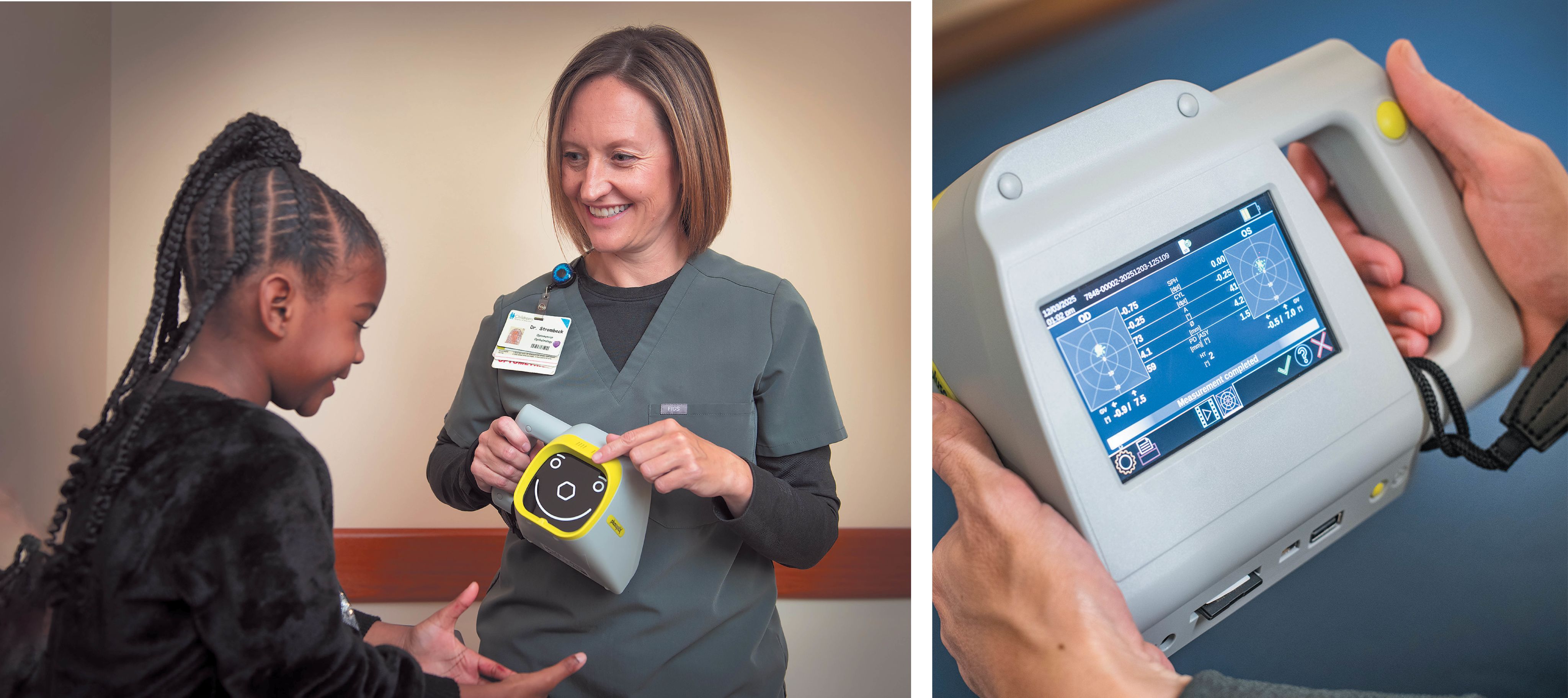
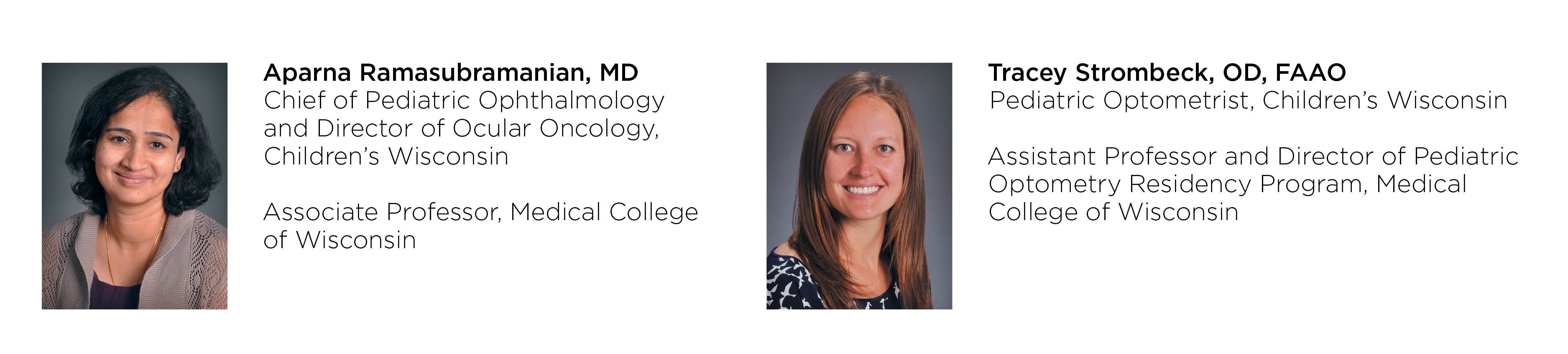
The Children’s Wisconsin Eye Program, led by Aparna Ramasubramanian, MD, and Tracey Strombeck, OD, FAAO, has implemented a unified, data-driven approach to vision screening that centers on both innovation and access. Since December 2020, the pediatric medical group has conducted more than 84,000 vision screenings using photo screening technology, a tool that enables earlier identification of amblyogenic risk factors. Of those, nearly 4,000 children, or roughly 5%, were found to have concerning risk factors and were referred for further care. The Eye Program and Primary Care are now looking at a more targeted screening approach and improved photo screening technology, which they hope to implement next year to improve both precision and efficiency.
At the core of this initiative is a robust collaboration between the Eye Program’s optometrists and ophthalmologists. Five pediatric-trained optometrists provide high-quality care for children with non-surgical conditions, including amblyopia and refractive errors. For patients requiring advanced interventions such as strabismus surgery, cataract treatment or ocular oncology care, five fellowship-trained pediatric ophthalmologists ensure timely access to surgical and subspecialty services. This “One Team” model streamlines care and ensures seamless transitions from screening to diagnosis to treatment.
Beyond the clinic walls, the Children’s Wisconsin Eye Program team is influencing statewide efforts. Two of our team’s optometrists, Alicia Chacon, OD, and Simran Brar, OD, serve on the board of Prevent Blindness Wisconsin, helping to shape the future of children’s vision health across the state.
Access to care has also expanded significantly. In addition to three locations in the Milwaukee area, we have a full-time optometrist in the Fox Valley region who brings services closer to home in Northeast Wisconsin.
Looking ahead, our team is evaluating new photo screening technologies in partnership with Children’s Wisconsin Primary Care to further optimize screening accuracy in primary care settings. This initiative reflects a commitment not only to clinical excellence but also to population health — ensuring every child has the opportunity to see their world clearly.


References
1. https://www.nei.nih.gov/learn-about-eye-health/eye-conditions-and-diseases/amblyopia-lazy-eye
 Built with Shorthand