
Advancing Pediatric Surgical Imaging Through Interventional Collaboration
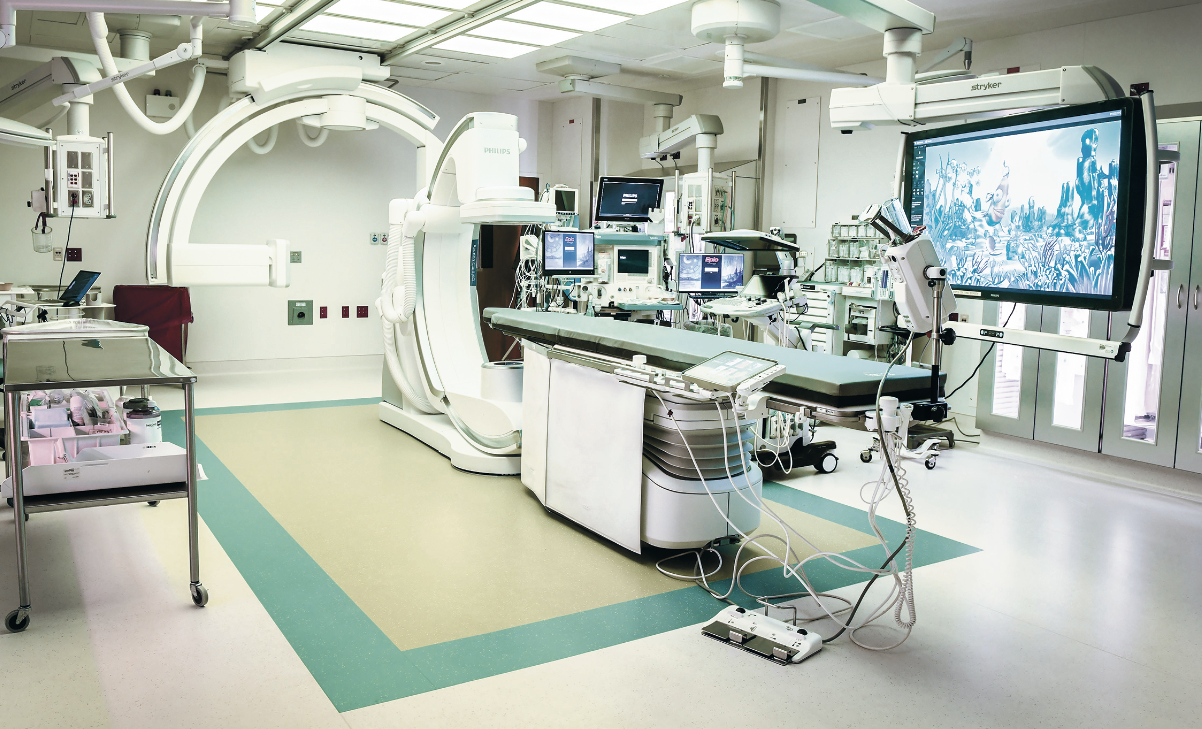

In 2025, Children’s Wisconsin reached a milestone with the launch of an advanced interventional imaging suite, strategically built behind the redline on the surgical platform. This reflects a national shift in recognizing interventional radiology (IR) as a core component of surgical care rather than a separate service.
As part of a two-phase expansion, we opened a hybrid biplane suite equipped with the Philips Azurion system. This technology supports open, closed and hybrid procedures across service lines including neurosurgery, oncology, transplant, gastroenterology and otolaryngology. A second, single-plane lab will follow in the next phase.
By integrating IR within our surgical platform, we’ve improved access, efficiency and safety. The Azurion system delivers precise imaging with significantly reduced radiation and contrast doses. With this suite, we reintroduced on-site cerebral angiograms and launched intra-arterial chemotherapy (IAC) treatments for retinoblastoma.
Retinoblastoma is a rare pediatric cancer affecting the eye. IAC delivers chemotherapy directly to the artery feeding the tumor, lowering systemic toxicity. These procedures require a multidisciplinary team and involve two to six rounds of treatment. Performing eye exams under anesthesia and IAC in the same suite streamlines care and minimizes exposures for young patients. According to Aparna Ramasubramanian, MD, Director of the Retinoblastoma Program at the MACC Fund Center for Cancer and Blood Disorders, this colocation reduces repeat anesthesia events and hospital visits — critical for this vulnerable group.
Our hybrid suite has also expanded access for vascular malformation procedures, increased IR biopsy support for kidney transplant patients and enabled collaborative neurosurgical and neurointerventional cases with our neurosurgery team. This strengthens our ability to deliver complex, minimally invasive care without families needing to travel out of state.
John Nerva, MD, Neurosurgeon at Children’s Wisconsin and Froedtert & the Medical College of Wisconsin, added, “The new hybrid OR with a state-of-the-art biplane angiography machine dramatically improves our ability to care for patients with complex neurovascular diseases. This equipment improves patient safety and outcomes due to enhanced visualization of the vascular anatomy and reduces radiation and contrast doses, therefore improving efficiency and reducing procedural times. In particular, select patients with retinoblastoma who undergo chemotherapy infusion into the submillimeter ophthalmic artery benefit greatly from our new angiography equipment at Children’s Wisconsin.”



 Built with Shorthand